10th EU Mentoring Group: Austrian experience in developing an effective Agricultural Knowledge and Innovation System (AKIS)
As a well-established and valued platform for dialogue and knowledge-sharing on EU-relevant topics, the 10th EU Mentoring Group focused on the development of an effective and integrated Agricultural Knowledge and Innovation System (AKIS). Particular attention was given to the role of knowledge-transfer, mutual learning, education, advisory services, research, and innovation in supporting a modern and sustainable agricultural sector aligned with EU standards.
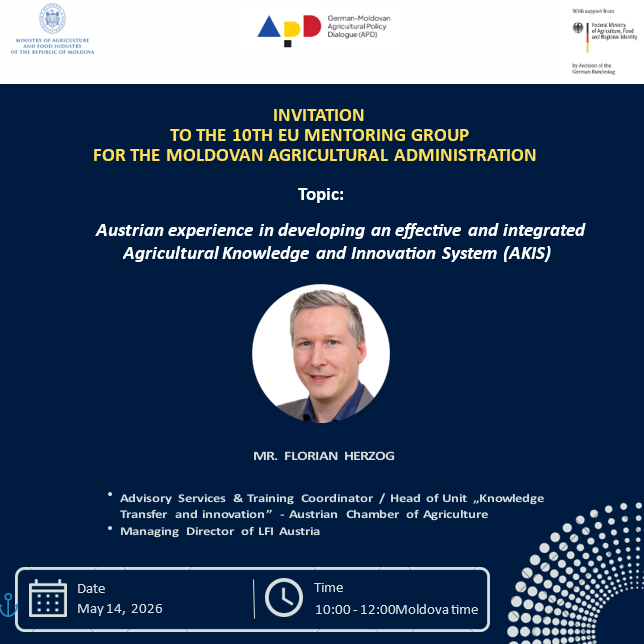
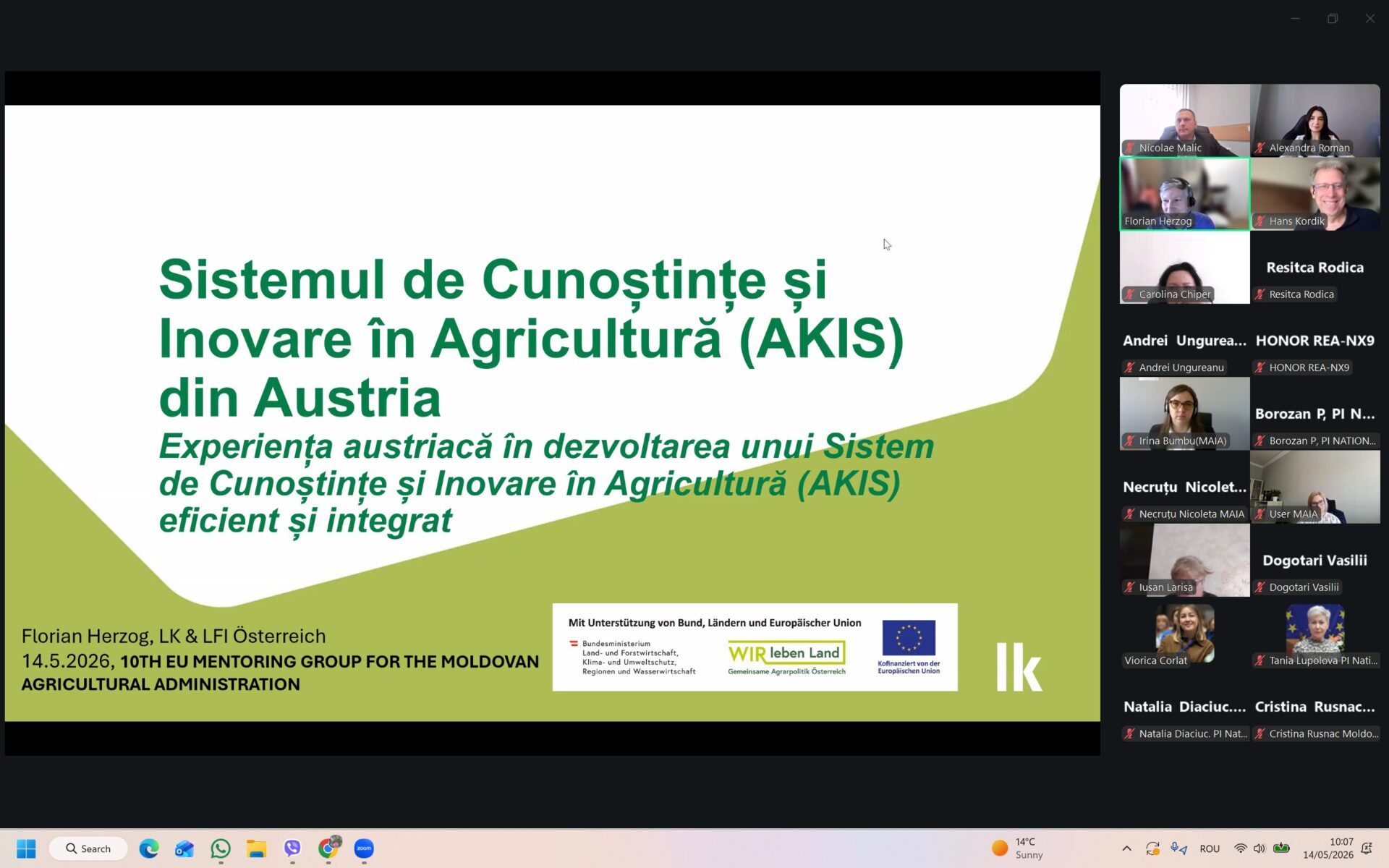
The Mentoring Group benefited from the valuable expertise of Florian Herzog, who also serves as Managing Director of Austrian Rural Training Institute (LFI). The expert shared the Austrian long-standing experience in building a highly integrated AKIS, offering participants a comprehensive overview of how knowledge transfer, innovation, and cooperation between institutions contribute to the competitiveness and sustainability of the agricultural sector. The Moldovan Ministry of Agriculture and Food Industry as well as the Center for Agriculture and Rural Development Advisory were the main beneficiaries of the Mentoring Group.
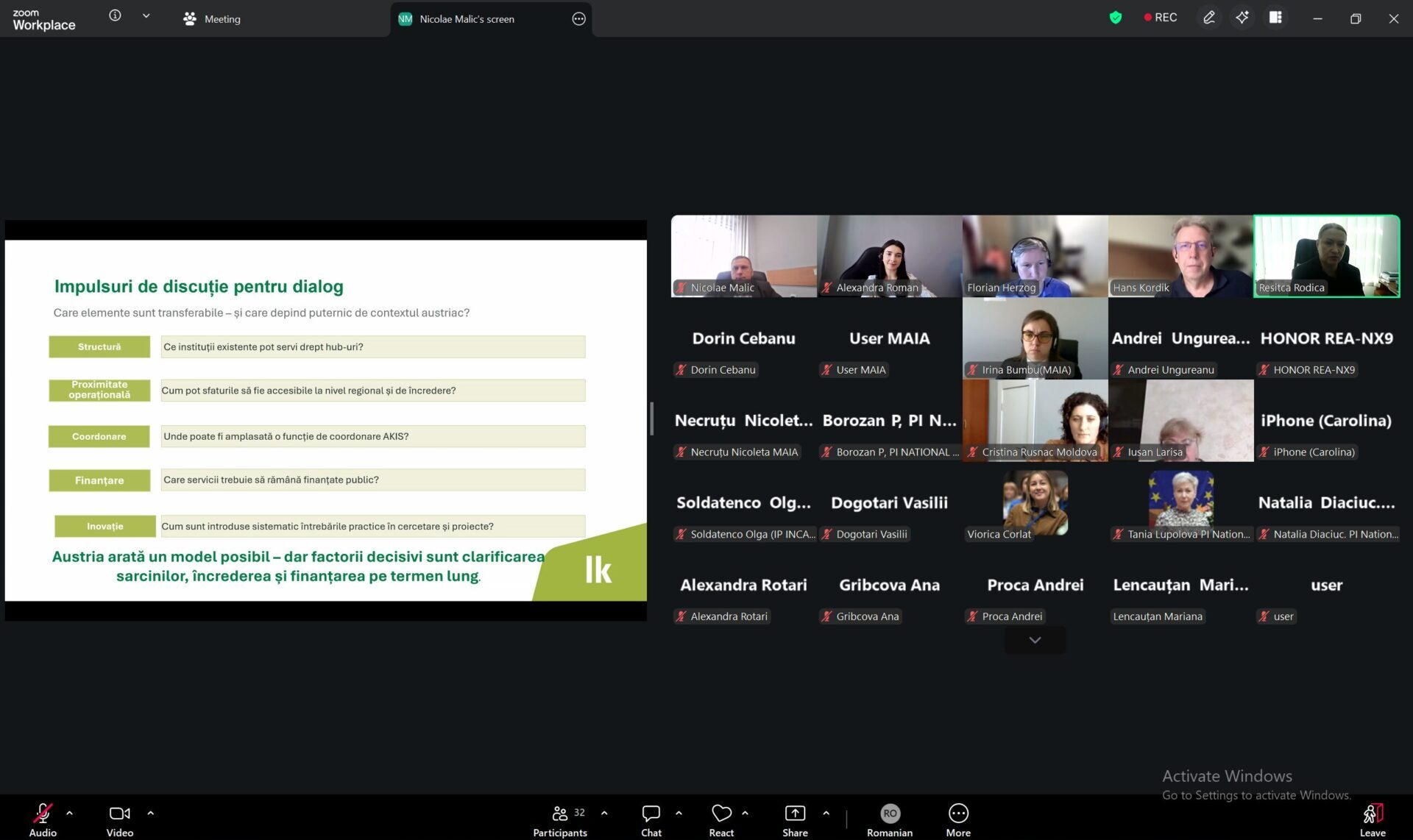
Drawing on practical examples from Austria, the presentation highlighted the importance of strong coordination mechanisms between advisory services, vocational education, research institutions, and agricultural practice. Participants learned about Austria’s publicly supported and regionally connected structures, including the central role of the Chambers of Agriculture, the LFI, and the implementation of the multi-stakeholder approach promoted under the EU Common Agricultural Policy (CAP).
Discussions emphasized that a well-functioning AKIS is essential for accelerating innovation, improving the transfer of research results into practice, and supporting farmers in addressing current economic, environmental, and technological challenges. Participants also reflected on how elements of the Austrian system could be adapted to Moldova’s institutional context as the country advances on its European integration path, particularly regarding advisory services, lifelong learning, and cooperation between research and practice.